
Introduction
In 2026, building a SaaS product without strong security architecture is financial suicide.
Data breaches destroy trust.
Trust determines valuation.
Valuation determines growth.
SaaS security architecture is not an optional feature. It is foundational infrastructure.
What Is SaaS Security Architecture?
SaaS security architecture refers to the system design that protects:
User authentication
Customer data
API endpoints
Payment transactions
Multi-tenant data isolation
Cloud infrastructure
It defines how your platform prevents unauthorized access and data leaks.
Core Components of SaaS Security
1. Authentication & Authorization
Authentication verifies identity.
Authorization controls permissions.
Modern SaaS platforms use:
JWT (JSON Web Tokens)
OAuth 2.0
Multi-Factor Authentication (MFA)
Without proper role-based access control, users may access data they shouldn’t.
2. Multi-Tenant Data Isolation
In multi-tenant SaaS systems, multiple customers share the same infrastructure.
Security must ensure:
Tenant-level data separation
Encrypted storage
Strict query filtering
One data leak can collapse your business reputation overnight.
3. API Security
APIs are the nervous system of SaaS platforms.
Security measures include:
Rate limiting
Input validation
Encrypted HTTPS communication
API keys and token validation
Weak APIs are the most common attack point.
4. Cloud Infrastructure Security
Modern SaaS platforms run on cloud services.
Security includes:
Firewall configuration
Server access control
Encrypted backups
Regular vulnerability scanning
Cloud security is not automatic. It must be configured correctly.
Common SaaS Security Mistakes
Storing passwords without hashing
Ignoring SSL encryption
Weak admin panel protection
No audit logging
No data backup strategy
Startups often focus on features first and security later.
That mindset is expensive.
Why Security Affects SaaS Valuation
Investors and enterprise clients evaluate:
Compliance readiness
Data protection standards
Infrastructure resilience
Breach history
A strong SaaS security architecture increases trust and long-term enterprise adoption.
Security is not a cost. It is a growth multiplier.
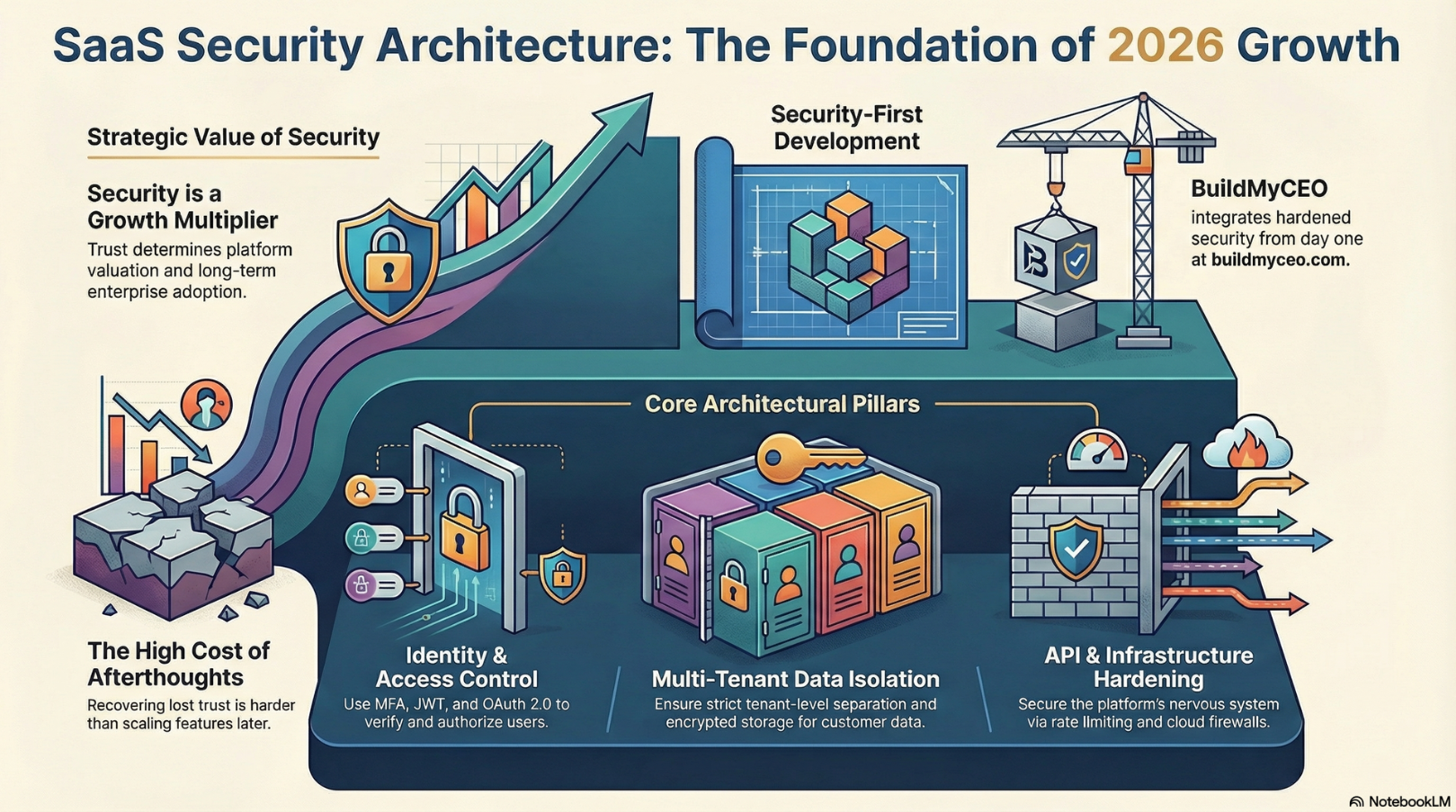
How BuildMyCEO Designs Secure SaaS Platforms
At BuildMyCEO, security is integrated into development from day one
Our SaaS development approach includes:
Secure authentication systems
Multi-tenant data isolation
Encrypted database structures
API-level security implementation
Cloud configuration hardening
Continuous monitoring setup
We don’t patch security later.
We build it into the foundation.
Conclusion
In 2026, SaaS growth is directly tied to security reliability.
You can scale features later.
You cannot recover lost trust easily.
If you are building a SaaS platform, security architecture must be part of your initial blueprint — not an afterthought.
